
BIMANIPULATOR

Dual-Arm Intelligence
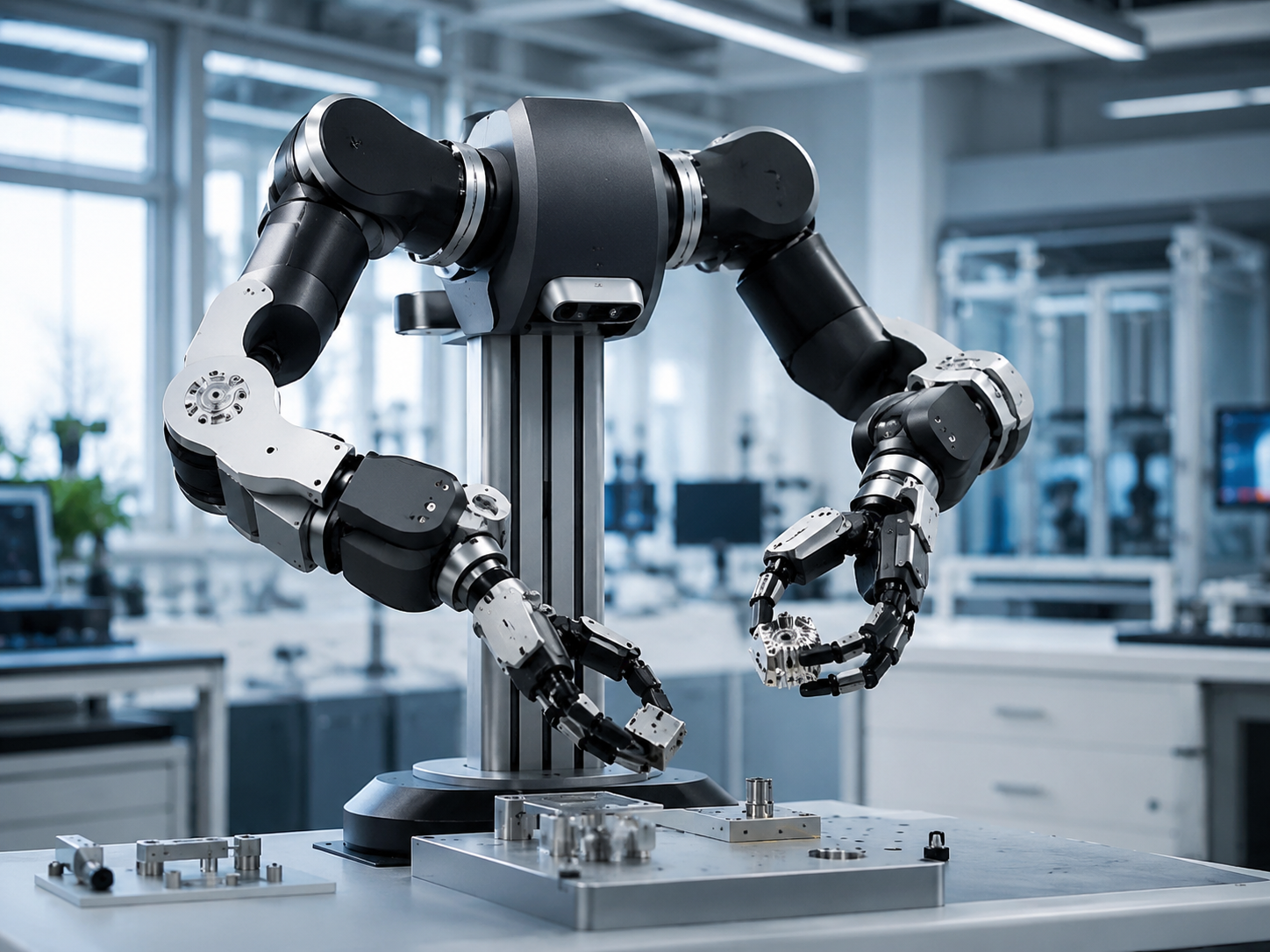
Two robot manipulators coordinating in a shared workspace
Multi-agent RL · VLA · Demonstration

Bimanipulator

We teach multiple arms to share space, exchange intent, and complete tasks concurrently—without rigid work zones or sequential waiting.

MAPPOCollision avoidanceDemonstration data
83–95%success across four scenes
4pick-and-place layouts
CTDElearning architecture
2025–26coordination to VLA

How can several arms work at the same time without turning shared space into a bottleneck?

In a shared workspace, each manipulator changes the planning problem faced by every other manipulator. A locally short path may block a partner, create a collision several steps later, or force the entire system to wait.

RV Lab treats each arm as a cooperative agent. Centralized training gives the critic global context, decentralized execution keeps control scalable, and a compact line-segment model makes minimum inter-link distance efficient to compute. The next stage adds synchronized demonstration data and vision-language-action learning.

Geometry, cooperation, and reusable robot experience

The program spans real-time safety at the joint level and higher-level task learning from multimodal demonstrations.

01 / REPRESENT

Efficient collision geometry

Approximate each link with line segments and use minimum distance as a practical safety signal.

02 / COORDINATE

Multi-agent policy learning

Train with global information while allowing each arm to execute from local observations.

03 / GENERALIZE

Demonstration and VLA

Synchronize video, language, robot state, objects, and actions into reusable embodied datasets.

Represent, negotiate, move, learn again

Safety and efficiency are jointly optimized rather than bolted together after path planning.

01 · MODEL

Compact geometry

Line-segment links expose fast and meaningful inter-robot distance.

02 · SHARE

Global context

The centralized critic observes the coupled multi-arm state during training.

03 · EXECUTE

Local policies

Each robot selects actions without requiring a monolithic runtime controller.

04 · CAPTURE

Demonstrations

Successful interactions become synchronized data for simulation replay and VLA models.

A scalable representation for crowded robot cells

Native-ratio figures keep the scientific content legible and link directly to the full paper.

Line-segment representation and multi-agent reinforcement-learning architecture
Multi-manipulator MADRL · Sensors 2025

Collision-free posture control without mesh-level overhead

The method pairs a line-segment link representation with MAPPO and centralized training/decentralized execution. Minimum inter-link distance becomes an interpretable reward signal that encourages early coordination rather than emergency avoidance.

  • Simultaneous pick-and-place in four shared-workspace scenes
  • Reported success rates between 83% and 95%
  • Faster completion than key-point and sequential-operation baselines
Open paper and full-size figures →

Figure 1 from the linked open-access article (CC BY 4.0).

Successful multi-manipulator pick-and-place scenes
Evaluation · Four scenes

Concurrent motion under changing spatial constraints

The evaluation varies robot count, initial layout, targets, and potential interference. Successful trials show arms making progress together instead of partitioning the workspace or waiting for a fixed sequence.

  • One learned coordination method across multiple scene layouts
  • Collision avoidance evaluated during full task execution
  • Task time considered alongside success and safety
Inspect the complete evaluation →

Figure 15 from the linked open-access article (CC BY 4.0).
From coordinated motion to embodied foundation models

Current 2026 work builds the data infrastructure needed to move beyond one policy per task.

Dual-arm manipulation system
Multimodal capture

Bimanual demonstrations

Time-aligned video, state, action, object, and language records.

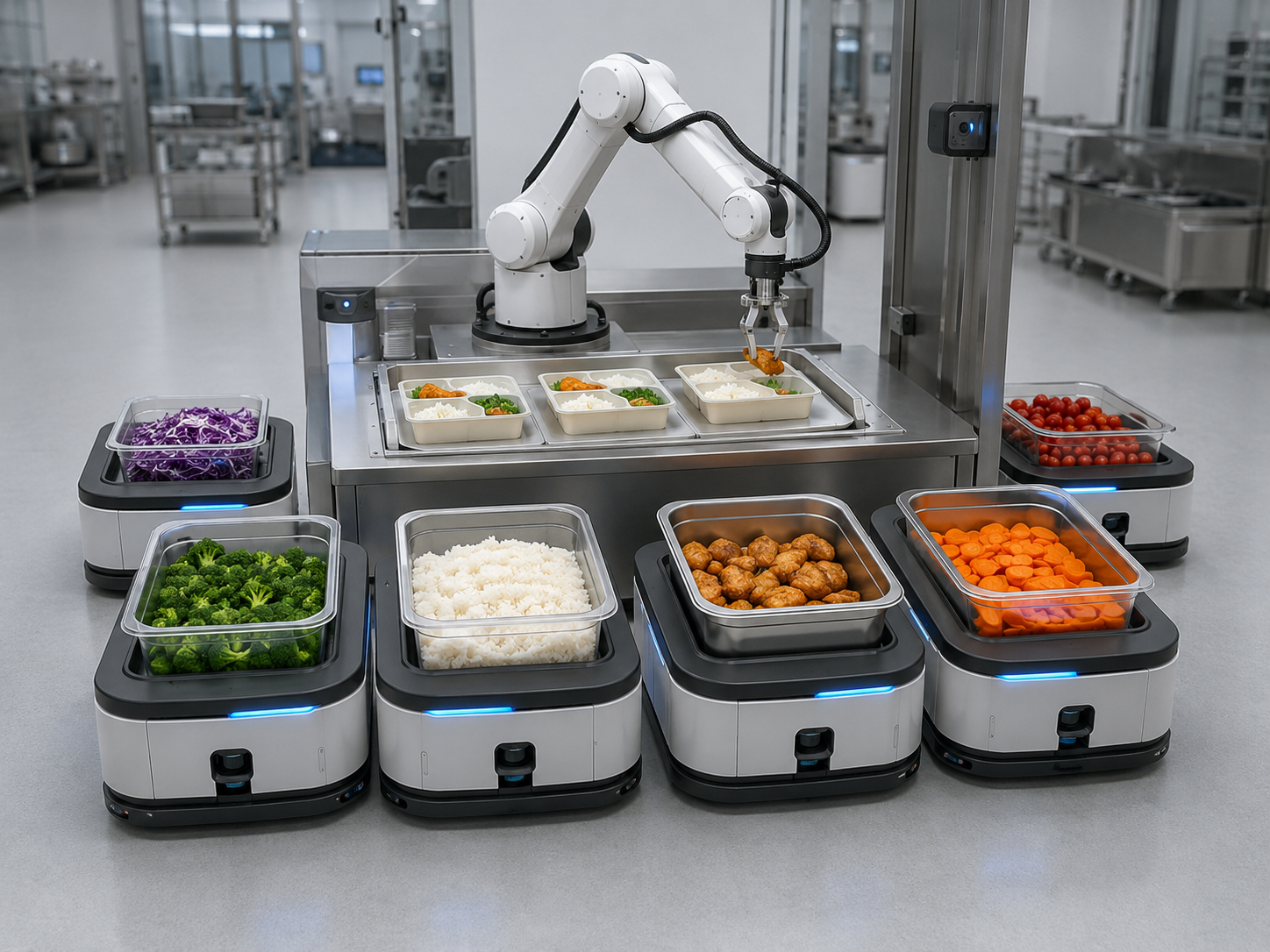
Cooperative robot food automation
Simulation

Isaac Sim replay

Structured demonstrations reproduced for scalable training and analysis.

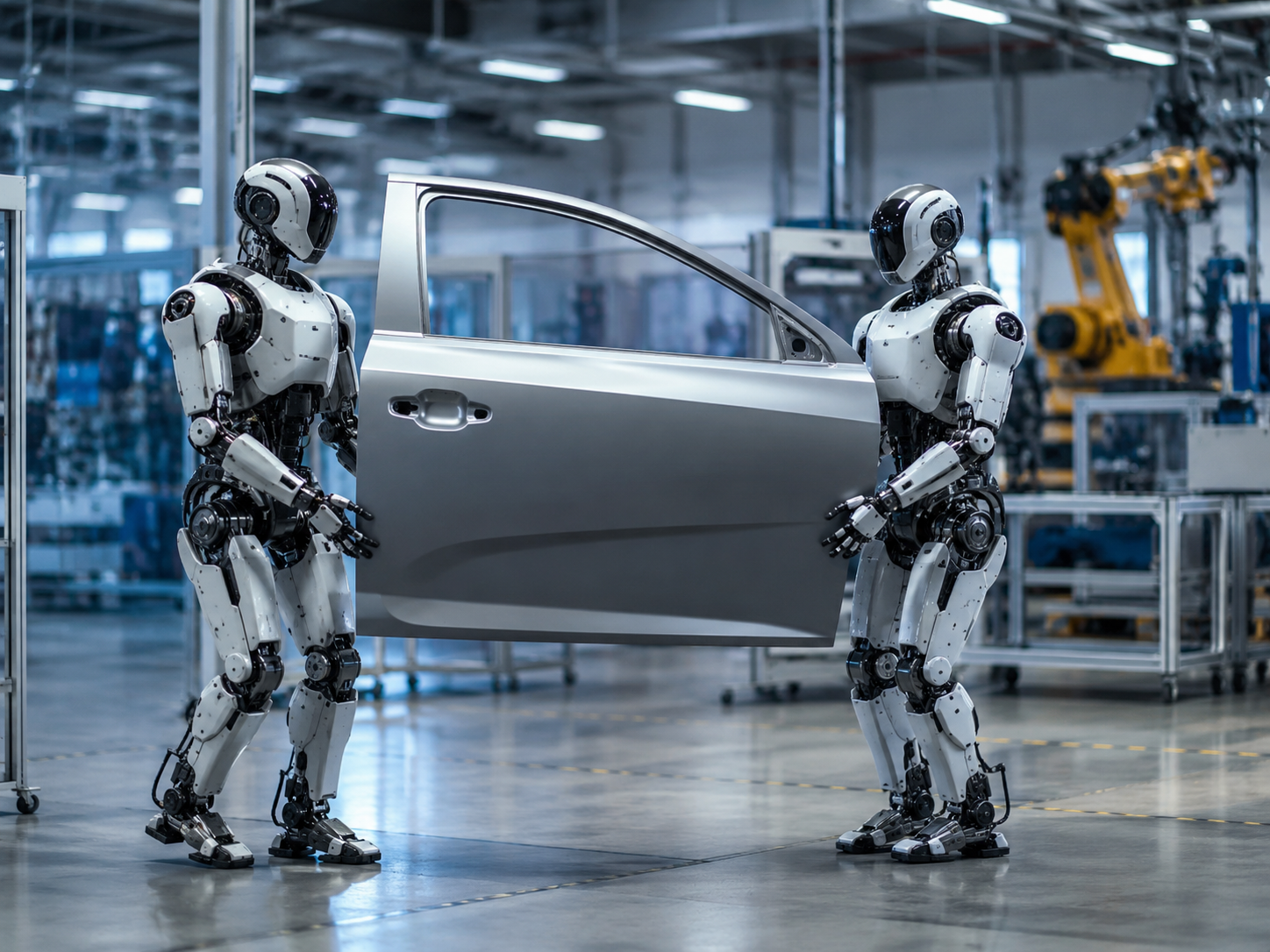
Embodied robots handling an automotive component
Foundation models

Vision-language-action

Reusable skill learning conditioned on observations and task intent.

Coordination to reusable intelligence

Verified work includes the 2025 journal paper and two 2026 proceedings studies on the demonstration pipeline.

Sensors · 2025

Multi-Agent DRL for Collision-Free Posture Control

Efficient geometric representation and MAPPO-based coordination for multi-manipulator systems.

Read publication →
KSME · 2026

Real-Time Multimodal Data Collection for Bimanual VLA

A synchronized data pipeline for training vision-language-action models on dual-arm tasks.

View proceedings →
KSME · 2026

Isaac Sim Demonstration Collection and Replay

A framework for recording structured dual-arm demonstrations and reproducing them in simulation.

View proceedings →

Coordination connects every embodiment

Teach robots to work together.

We welcome students and collaborators in multi-agent learning, robot coordination, demonstration systems, and VLA research.