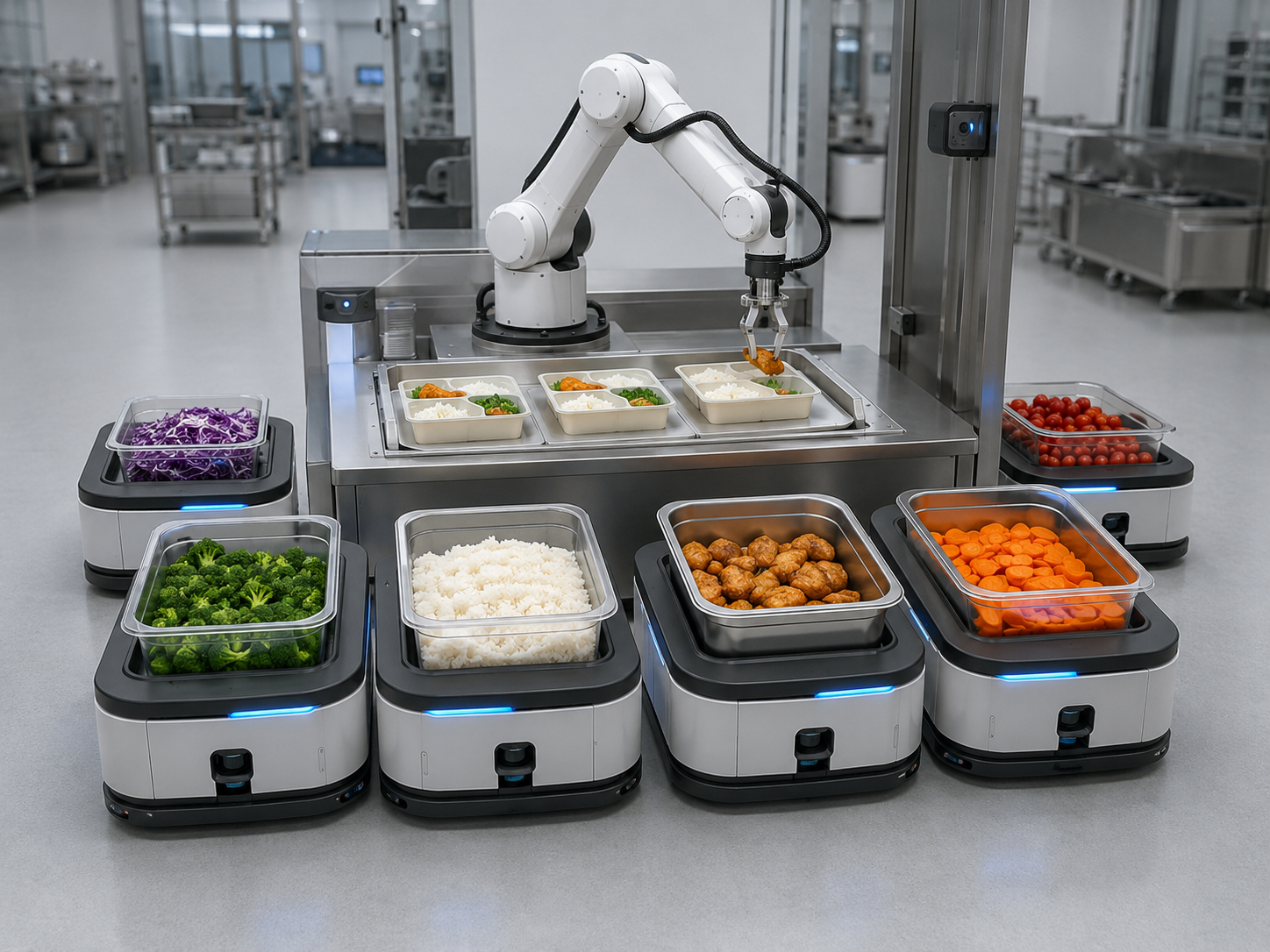


MANIPULATOR

Robot Arm Control
Industrial robot manipulator performing intelligent automation
Manipulation · Inspection · Learning

Manipulator

We connect perception and action so robot arms can inspect, pick, and process real objects despite variation in appearance, pose, and surface condition.

Robot learningMachine visionIndustrial AI
97.06%inspection accuracy
100%reported precision
60optical configurations
2023–26active research line

How can a robot act reliably when objects, surfaces, and observations refuse to stay identical?

Industrial automation works best when the world is carefully constrained. Our research addresses what happens outside that ideal: parts shift, reflections change, defects are rare, and a motion that succeeds in simulation meets new uncertainty on the factory floor.

RV Lab studies the full loop from visual inspection to physical action. Machine-vision models learn global structure and local details; portable optics quantify reflective surfaces; reinforcement learning and asymmetric actor–critic training turn simulation knowledge into deployable picking policies.

Perceive quality, plan contact, improve the process

Research spans both what the robot sees and how it uses that information to complete a physical task.

01 / MANIPULATE

Learning-based picking

Design observations, rewards, and privileged training signals for robust grasping and pick-and-place behavior.

02 / INSPECT

Visual quality inspection

Learn normal appearance from limited data and detect missing parts, anomalies, and production-domain shifts.

03 / MEASURE

Surface-aware automation

Control lighting geometry and image statistics to estimate polished-metal roughness without contact.

From a camera frame to a verified action

A useful industrial system must carry perception results all the way into a robot decision and back into process verification.

01 · OBSERVE

Acquire evidence

Images, depth, robot state, and controlled lighting capture the task condition.

02 · UNDERSTAND

Estimate state

Detect parts, defects, surface properties, and the uncertainty of each prediction.

03 · ACT

Plan interaction

Learn or optimize reaching, grasping, approach, and process motions.

04 · VERIFY

Close the loop

Inspect the result and use failures to improve models, rewards, and fixtures.

Inspection that sees both the whole and the detail

The figures are displayed at their native aspect ratio and link to the full-resolution open-access article.

Two-stream global and local feature network for defect inspection
Defect inspection · Sensors 2023

A two-stream view of normality

One-class inspection is valuable when real defects are scarce. The proposed network joins a global stream, which captures overall assembly structure, with a local stream, which preserves small visual details that a single representation can miss.

  • Validated in both laboratory and production-site settings
  • 97.06% accuracy and 100% precision in the reported production evaluation
  • 0.9833 F1 score on the production-site dataset
Open paper and full-size figures →

Figure 1 from the linked open-access article (CC BY 4.0).
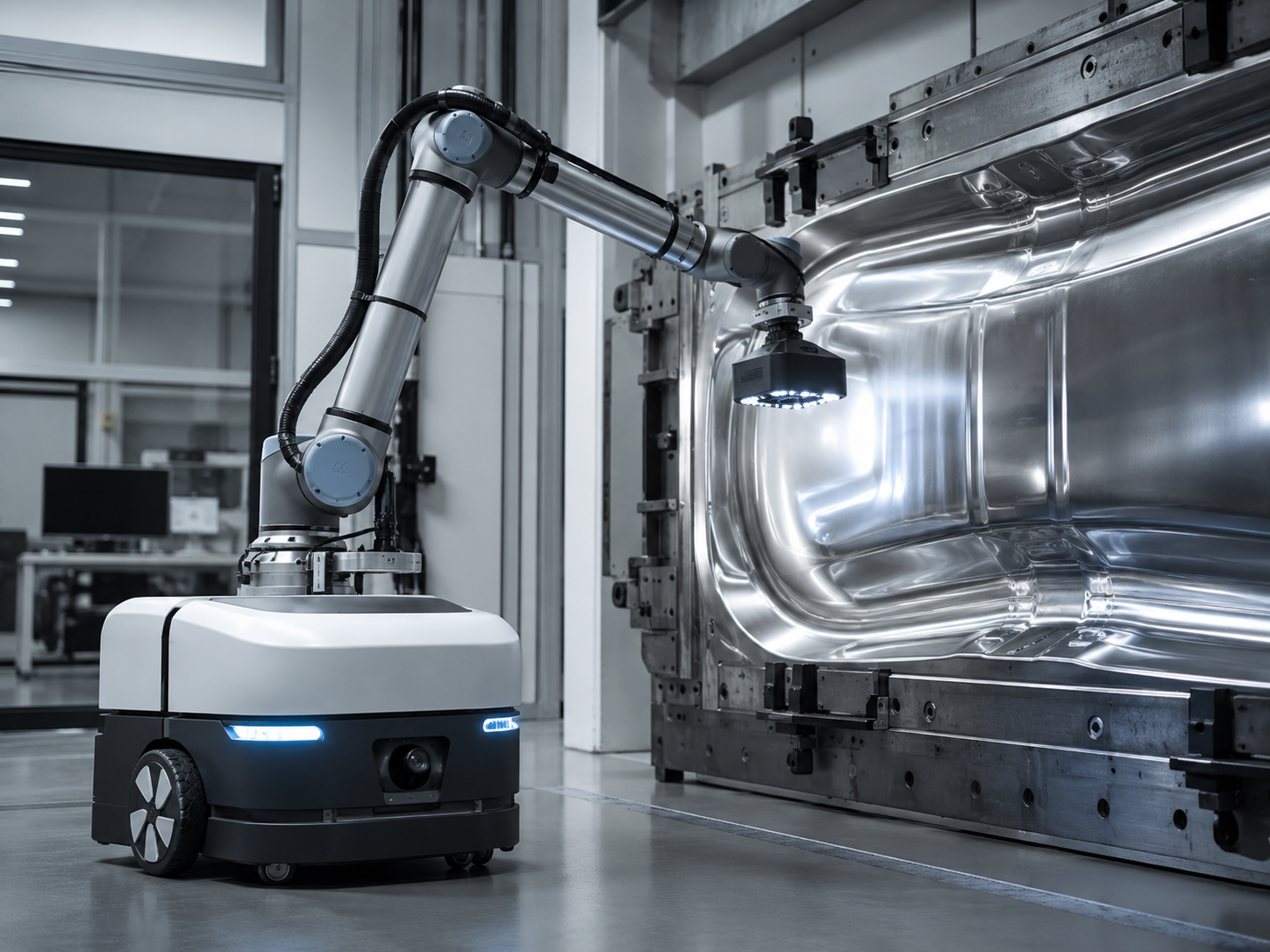
Mobile manipulator inspecting a polished automotive mold
Portable metrology · ACDSA 2025

Taking surface measurement to the workpiece

Traditional visual grading of polished metal depends on the operator and viewing condition. The portable machine-vision system systematically varies lighting angle, distance, and height, then balances grayscale contrast against system size to identify a practical configuration.

  • Sixty optical configurations evaluated
  • Image statistics correlated with measured surface roughness
  • Designed for portability and faster non-contact inspection
Read the study →

Evidence from production-oriented evaluation

Metrics are shown only where the cited publication reports them.

97.06%defect-inspection accuracy
1.000reported precision
0.9833reported F1 score

Robotics for real production variation

The program links learning and machine vision to inspection cells, adaptive finishing, and flexible material handling.

Vision, metrology, and learned control

Recent publications show the program widening from inspection toward closed-loop manipulation.

ACDSA · 2025

Portable Machine Vision for Polished Surface Roughness

A portable optical system for measuring polished metallic surfaces outside a fixed inspection cell.

Read publication →
KSME · 2026

Asymmetric Actor–Critic for Manipulator Picking

Privileged simulation information improves training while real-world policy inputs remain deployable.

View proceedings →
Sensors · 2023

Two-Stream One-Class Classification for Defect Inspection

A global-local representation for accurate inspection under laboratory and production conditions.

Read publication →

Manipulation becomes more capable together

Turn perception into physical capability.

We welcome research on robot learning, visual inspection, simulation, and adaptive industrial automation.